Dino Slow: A Playful Display Font for Creative Projects
Every designer knows the moment: you're working on a project that needs personality, something that feels approachable yet distinctive. You scroll through font libraries, testing option after option, searching for that typeface that captures a specific mood—whimsical without being childish, friendly without sacrificing clarity. This is where Dino Slow enters the conversation, a display font that brings character to designs where standard typefaces fall flat.
What Makes This Typeface Stand Out
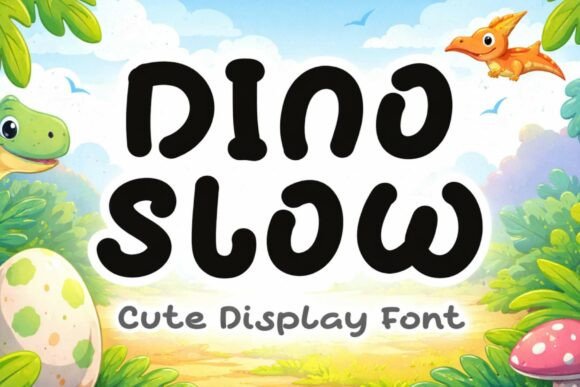
Dino Slow is a premium display font designed with rounded forms and gentle curves that give it an instantly recognizable warmth. Unlike rigid geometric typefaces, its letterforms carry a subtle organic quality—think of the way a child's drawing has charm precisely because it isn't perfectly symmetrical. The font includes both uppercase and lowercase letters, numerals, punctuation marks, and multilingual support, making it versatile enough for international projects and varied content needs.
What sets it apart from other creative fonts in the display category is its balance. Many playful typefaces sacrifice readability for style, but Dino Slow maintains clear letter differentiation even at smaller sizes. The "a" doesn't look like an "o," the "I" is distinguishable from "l," and numerals remain crisp. These details matter enormously when you're designing for real-world applications where your audience needs to absorb information quickly.
Where Dino Slow Finds Its Home
Think about the last time a product caught your eye on a shelf. Chances are, the typography played a significant role in that first impression. Packaging design for children's products, artisanal foods, and seasonal goods benefits enormously from typefaces that communicate warmth and approachability. Dino Slow works beautifully on labels for bakery items, craft supplies, children's clothing tags, and specialty gift boxes.
Social media graphics present another natural fit. Instagram stories, Pinterest pins, and Facebook posts all demand fonts that grab attention within milliseconds. A display font like this one can transform a simple announcement into something people actually stop scrolling to read. Consider using it for:
- Seasonal sale announcements and holiday promotions
- Quote graphics and motivational posts
- Event invitations and countdown graphics
- Product launch teasers and brand storytelling posts
- Tutorial headers and educational content
For small business owners building a brand identity, choosing typography that reflects your values is one of the most consequential decisions you'll make. If your brand personality leans toward the friendly, approachable, and slightly playful, Dino Slow can anchor your visual language. It works particularly well for businesses targeting families, pet owners, educators, hobbyists, and anyone whose audience appreciates a human touch over corporate sterility.
Practical Applications Across Industries
Let's get specific about where this font delivers real value. Logo design projects for daycares, pediatric practices, toy shops, ice cream parlors, and community organizations benefit from typefaces that feel welcoming rather than intimidating. Dino Slow's rounded geometry creates an immediate sense of trust and friendliness—qualities that take years to build through other brand elements but can be suggested instantly through thoughtful typography.
Editorial design might seem like an unlikely pairing, but magazine headers, blog post titles, and newsletter subject lines often need a spark of personality. A children's book cover, a parenting blog, a recipe collection for family cooking—these projects call for typefaces that signal their content's tone before a single word is read. Dino Slow handles this signaling work efficiently.
Web design applications deserve careful attention. While display fonts rarely work well for body text, they excel in hero sections, call-to-action buttons, navigation labels, and section headers. Pairing Dino Slow with a clean sans serif font for body copy creates a hierarchy that guides the eye naturally. The display font draws attention to key messages while the supporting typeface ensures comfortable reading for longer passages.
Merchandise designers also find practical value here. Tote bags, mugs, stickers, t-shirts, and stationery items often feature short phrases or single words where typography carries the entire design. "Adventure Awaits," "Be Kind," "Best Teacher Ever"—these simple messages gain visual power when set in a typeface with genuine personality.
Getting the Most From Your Font Choice
Choosing a font is only the beginning. How you use it determines whether your design succeeds or falls flat. Here are practical considerations for working with Dino Slow effectively:
Size matters significantly. Display fonts are engineered to perform at larger sizes. Setting Dino Slow at 12 points for body copy would undermine its strengths. Instead, reserve it for headlines, subheadings, and featured text where its character can breathe. For body content, pair it with a readable serif font or sans serif that complements without competing.
Color and contrast affect how any typeface reads. Because Dino Slow has moderate stroke weight, it maintains visibility across a range of color combinations, but high-contrast pairings—dark text on light backgrounds or vice versa—will always produce the cleanest results. Test your designs in both print and digital contexts, as colors render differently on screen versus paper.
Spacing and alignment deserve attention too. Display fonts often benefit from slightly increased letter-spacing (tracking) when used in all-caps settings. Play with these adjustments to find the rhythm that feels right for your specific project. A branding project might call for tighter spacing to create a cohesive wordmark, while a poster might benefit from more generous spacing for readability at a distance.
Pairing and Licensing Considerations
Font pairing is part art, part experimentation. Dino Slow's rounded, friendly forms pair well with geometric sans serifs for a modern look, or with traditional serifs for a more eclectic feel. Try setting your headlines in Dino Slow and your supporting text in fonts like Open Sans, Lato, or even a script font for accent elements. The goal is contrast without conflict—your headline and body text should feel like they belong to the same family conversation without being identical twins.
Before purchasing any commercial font, review the licensing terms carefully. Most premium fonts come with specific usage rights covering print, digital, and merchandise applications. Some licenses are project-based while others offer broader coverage. Understanding these terms protects you legally and ensures your investment serves your needs long-term. If you plan to use the font across multiple client projects, confirm the license supports that workflow.
Dino Slow's multilingual support expands its usefulness for businesses operating across language markets. Whether you're creating materials in English, Spanish, French, German, or other supported languages, the consistent letterforms maintain your brand's visual coherence across all communications.
Making Typography Work for Your Goals
The best typography decisions start with your audience, not your personal preferences. Before selecting any design asset, ask yourself who will encounter this design and what impression you need to create. A toy company needs different typographic energy than a law firm. A children's birthday invitation speaks a different visual language than a corporate annual report.
Dino Slow answers a specific set of creative needs: warmth, approachability, playfulness, and charm. It won't be the right choice for every project, and that's exactly as it should be. No single font solves every design challenge. But when your project calls for something that feels genuinely friendly—something that makes people smile before they've finished reading—this typeface delivers that experience with consistency and style.
Take time to experiment. Set your actual project text in the font rather than relying on preview samples. Check how it looks at the sizes you'll actually use. Test it in your brand colors. Print a sample if the project is print-based. These practical steps separate confident typography choices from hopeful guesses, and they're what separate professional-looking designs from amateur ones.