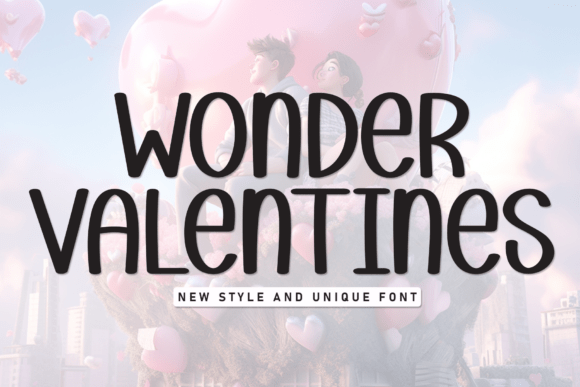
Wonder Valentines: A Font That Feels Like a Handwritten Love Letter
There’s something undeniably magnetic about a design that feels personal. In a world saturated with crisp, corporate sans-serifs and predictable layouts, a touch of warmth can stop a viewer in their tracks. Imagine a typeface that doesn’t just spell out words but whispers them, with the gentle imperfections and joyful curves of a note passed between friends. This is the essence of a charming handwritten display font, a design asset that can transform the mundane into the memorable. For creators seeking to inject a sense of whimsy, authenticity, and heartfelt appeal into their work, such a font becomes less of a tool and more of a collaborator.
The Anatomy of a Friendly Typeface
What makes a font like this so effective? It’s all in the details. The strokes are intentionally fluid, mimicking the natural flow of a pen held with a relaxed hand. Letters connect with a gentle, irregular bounce, avoiding the rigid geometry of traditional typography. This creates a rhythm that feels organic and approachable. The overall character is a blend of sweetness and playful energy—think of the looping tail of a ‘y,’ the soft arch of an ‘h,’ or the charming dot of an ‘i.’ It’s this unique personality that allows it to breathe life into projects, making them feel less designed and more discovered.
This particular style of handwritten font excels where connection is key. It’s not suited for long blocks of body text, but its strength lies in headlines, logos, and focal points where you want to establish an immediate emotional rapport. Its display font nature means it’s crafted for impact at larger sizes, where every beautiful curve and subtle variation can be fully appreciated. For a brand identity rooted in approachability, this kind of script font can become the cornerstone of a visual language that feels human and relatable.
From Wedding Invitations to Brand Stories: Practical Applications
The true value of a creative asset is measured by its versatility. A font with such a distinct personality has a surprisingly wide range of applications. Consider how it could elevate a small business’s packaging, turning a simple product label into a keepsake. Or how it could make social media graphics for a lifestyle blogger instantly more engaging, encouraging followers to pause their scroll.
- Invitations & Stationery: This is its native habitat. Wedding invitations, baby shower announcements, and boutique greeting cards are transformed, feeling custom-made and deeply personal.
- Logo Design & Branding: For a bakery, a floral studio, a children’s boutique, or a creative entrepreneur offering handmade goods, this font can form the heart of a logo design that feels warm and trustworthy.
- Packaging & Merchandise: Imagine this font on a coffee bag, a candle label, or the hang tag of a knitted scarf. It communicates care and craftsmanship, elevating the perceived value of the product.
- Digital & Print Marketing: Use it for headline text on a website hero section, in email newsletter banners, on posters for local events, or within editorial design for magazine pull-quotes. It adds a burst of personality to any marketing asset.
- Social Media & Content: Perfect for quote graphics, Instagram stories, YouTube thumbnails, and digital products like printable planners or worksheets. It helps build a recognizable visual consistency across platforms.
Making It Work: Pairing and Practicality
Introducing a powerful display typeface into a project requires a thoughtful approach. Its strength can become a weakness if overused. The key is balance and contrast. A common and effective strategy is to pair this expressive handwritten font with a clean, neutral companion. A simple sans serif font for body copy or a classic serif font for subheadings provides a stable foundation, allowing the featured font to shine without overwhelming the design.
Always prioritize readability. Test the font at the actual size it will be used. While beautiful, some handwritten styles can be challenging to read in small print or at a distance. Check the legibility of key letters, especially in combinations like ‘cl’ or ‘rn,’ which can sometimes blur. Most premium fonts include a full suite of alternate characters and stylistic sets—exploring these can help solve specific typographic challenges and add a unique flair to your work.
For any commercial project, licensing is a non-negotiable step. Ensure the font license covers your intended use, whether for a client’s logo, merchandise for sale, or a digital product you’ll distribute. This professional diligence protects you and respects the work of the font designer. When you find a premium font that aligns with your vision, investing in the proper license is an investment in your project’s professionalism and legal safety.
Ultimately, choosing a typeface like this is about more than aesthetics; it’s about selecting a voice. Does its playful charm align with your project’s goals? Will its friendly appeal resonate with your target audience? By treating typography as a core component of your brand identity and visual strategy, you move beyond decoration and into meaningful communication. A font that feels like a handwritten note can be the very thing that makes your audience feel seen, understood, and delighted—leaving that everlastingly warm impression you’re aiming for.