Pink Donut: The Sweet Spot Between Playful and Professional
There’s a reason certain visuals make us smile before we even process the information. A perfectly rounded, sprinkle-topped pink donut is one of those things. It’s friendly, inviting, and instantly recognizable. Now, imagine capturing that exact feeling in a typeface. That’s the core idea behind the Pink Donut display font. It’s a design asset built on warmth and approachability, designed to make your projects feel immediately welcoming. If you’ve ever struggled to find a font that feels both joyful and versatile enough for real-world use, this might be the missing piece in your creative toolkit.
Understanding the Font's Friendly Anatomy
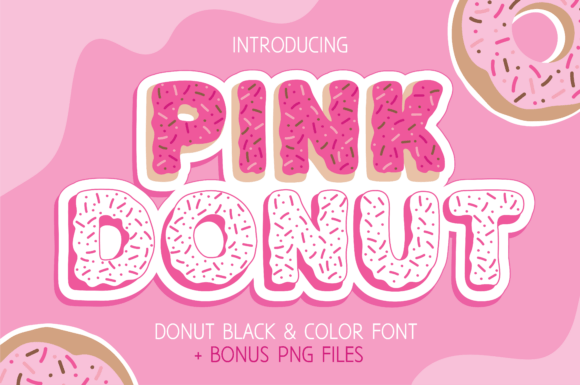
At its heart, Pink Donut is a display font, meaning it’s crafted for impact rather than long-form reading. Its visual characteristics are defined by soft, rounded edges, generous letter spacing, and a slightly whimsical, almost hand-drawn quality. This isn’t a stiff, corporate sans serif font or an elegant serif font. Instead, it sits in a sweet spot—a creative font that feels personal and crafted. Think of it as a handwritten font that has been carefully refined for clarity and consistency, making it far more reliable than a true script while retaining all of its charm.
This personality makes it incredibly effective for specific branding goals. A bakery, a children's boutique, a craft subscription box, or a lifestyle blog centered on joyful living would find an immediate kindred spirit in this typeface. It communicates a brand identity that is optimistic, creative, and focused on community. The key is that its friendliness feels genuine, not childish in a limiting way. It’s a premium font that understands its role: to add a layer of accessible charm without sacrificing functionality.
Where Playfulness Meets Practical Application
The real test of any design asset is how it performs across different mediums. Pink Donut shines in scenarios where you need to connect with an audience on an emotional level. For packaging design, imagine it on a box of gourmet cupcakes or artisanal candles—it immediately sets a tone of delightful indulgence. On social media graphics, particularly for Instagram Stories or Pinterest pins, its bold, friendly presence stops the scroll and makes your message feel approachable.
For logo design, it can be a fantastic choice for businesses that want to avoid looking overly formal. A logo set in Pink Donut tells customers, “We’re here to make your day a little brighter.” This extends seamlessly to marketing assets like sale announcements, email headers, and promotional flyers. In editorial design, it works beautifully for pull quotes, chapter headings, or magazine features targeting a lifestyle or family audience. It brings a much-needed dose of personality to layouts that might otherwise feel too sterile.
Even in web design and digital products, its utility is clear. Use it for a landing page headline for a creative workshop, a banner for a podcast about joyful entrepreneurship, or the title of a downloadable guide. Its high legibility at larger sizes ensures your message gets through clearly, while its style reinforces the emotional tone of your content.
Making It Work: Pairing and Professional Polish
A common question with a display font this distinct is: “How do I use it without overwhelming a design?” The answer lies in smart font pairing. Pink Donut is your star player for headlines, logos, and short, impactful text. To maintain readability and visual consistency, pair it with a clean, neutral companion. A simple modern typography sans serif like Montserrat, Lato, or Open Sans for body text creates a perfect balance. The contrast allows the display font’s personality to pop without competing for attention, ensuring your professional presentation remains sharp.
Always test your pairings in context. Create a mock-up of your packaging, your website homepage, or your social media post grid. Does the combination feel harmonious? Does the body text remain easy to read? This practical testing is more valuable than any theory. Also, review the full character set and any included styles (like bold or italic) within the font family. Knowing your full toolkit allows for more creative and effective solutions, like using a slightly bolder weight for sub-headers.
From Creative Spark to Commercial Project
For entrepreneurs and small business owners, the leap from a personal project to a commercial one requires attention to detail, especially regarding licensing. If you plan to use Pink Donut for a client’s brand, on merchandise for sale, or in a widely distributed digital product, you must ensure you have the correct commercial font license. Most premium fonts come with clear licensing tiers—personal, commercial, and enterprise. Taking the time to review this upfront protects your business and the work of the font’s creator.
Think of investing in a properly licensed, high-quality typeface as investing in your brand’s foundation. It’s a small cost that pays dividends in brand recognition and customer perception. A unique, well-chosen font like Pink Donut helps you stand out in a crowded market, making your materials instantly identifiable. It becomes a silent ambassador for your brand’s values—approachability, creativity, and care.
Ultimately, the best font is the one that disappears into the experience, leaving only the feeling you intended to create. Pink Donut is designed to do exactly that: to make your audience feel welcome, understood, and a little bit happier. Whether it’s gracing the cover of an invitation, the header of a blog, or the label on a product, it carries a promise of friendliness. In a world that can often feel overly complex, sometimes the most powerful design choice is one that simply brings a smile.